Placeholder Image

Ilaria, Cabernet Sauvignon

California, United States 2015 (750mL)
Regular price$59.00
/
Shipping calculated at checkout.
Your cart is empty.
  • Free Shipping on Orders Over $375
  • In stock, ready to ship
Fruit
Earth
Body
Tannin
Acid
Alcohol

Ilaria, Cabernet Sauvignon

Lest you think we only drink Cru Beaujolais around here, we recently spent a fascinating afternoon tasting a broad range of luxury Napa Valley Cabernets. This group included some big names (and price tags), as well as some lesser-known labels that made a big impression. Of the latter, the clear standout was today’s Ilaria Cabernet Sauvignon, crafted by rising-star winemaker Anna Monticelli.
This wine stood tall alongside boutique wines costing twice and three times as much—and, in fact, eclipsed many of them. It’s one of the best price-to-quality Napa Cabernets I have ever tasted. Ilaria is a personal passion project for Monticelli, whose full-time winemaking gig is at Piña Napa Valley, and her lengthy resume in the region has exposed her to plenty of first-rate raw material. Using fruit from the Atlas Peak, Howell Mountain, and St. Helena subzones, Monticelli’s 2015 Ilaria has all the concentration one could ask for in a modern Napa Valley red, but also terrific focus and real mineral character. There’s real Cabernet Sauvignon character, too, not just an inky mass of super-ripe fruit. I can’t overstate what a superb value this is, especially given what Cabernet lovers are willing to lay out for some cult labels. It says a lot about Napa that small-production gems like this are lying in wait around every corner!
Monticelli has built up an impressive resume over the course of a decade-plus in the Valley. After graduating UC Davis, she moved on to the Sorbonne in France, then to Château Cheval-Blanc in Bordeaux for an eye-opening apprenticeship during the harvest of 2000. Upon returning home to Napa, she spent two years as assistant winemaker at Seavey Vineyards and four more at Bryant Family Vineyards before joining Piña in 2007. Her Ilaria wines, part of the In Vino Felicitas project she started with her husband, Mario, are named for their daughter, who was born in 2009, the first vintage of this wine. Sourced primarily from vineyards in the volcanic soils of the Atlas Peak subzone, in combines 82% Cabernet Sauvignon, 12% Cabernet Franc and 6% Merlot aged in French oak barriques—but it is neither an overtly “oaky” nor an over-extracted style. As her experience shows, Monticelli knows Napa Cabernet, and this one has a compact, classic structure reminiscent of great Napa reds from the ‘Paris Tasting’ era.

Don’t get me wrong: This 2015 is a full-bodied wine that floods all the pleasure centers, but it has a very compact, focused feel to it and great balancing freshness. In the glass, it’s an opaque ruby-black with garnet reflections, combining scents of crushed blackberries, cassis, and huckleberry with lots of textbook graphite, tobacco, and cedar notes. There’s also a deep mineral component here—notes of crushed gravel and potting soil—that offers a counterpoint to the abundant fruit. And as I noted above, it didn’t just ‘hang in there’ with some of the elite, high-triple-digit Napa reds it shared our table with—it blew some of them away. Again, I don’t think we’ve offered a more impressive Napa Cabernet all year, and there’s no doubt this wine will age 10-15 years with ease. If you’d like to sneak a bottle or two now, decant it a good hour before service in large Bordeaux stems at 60-65 degrees. The wine has plenty of savor for something grilled or roasted, and more than enough power to handle whatever you throw at it: Given Anna and Mario Monticelli’s Italian leanings, check it out alongside a beef braciole. “In vino felicitas,” indeed—enjoy!
Placeholder Image
Country
Region
Sub-Region
Soil
Blend
Alcohol
OAK
TEMP.
Glassware
Drinking
Decanting
Pairing

United States

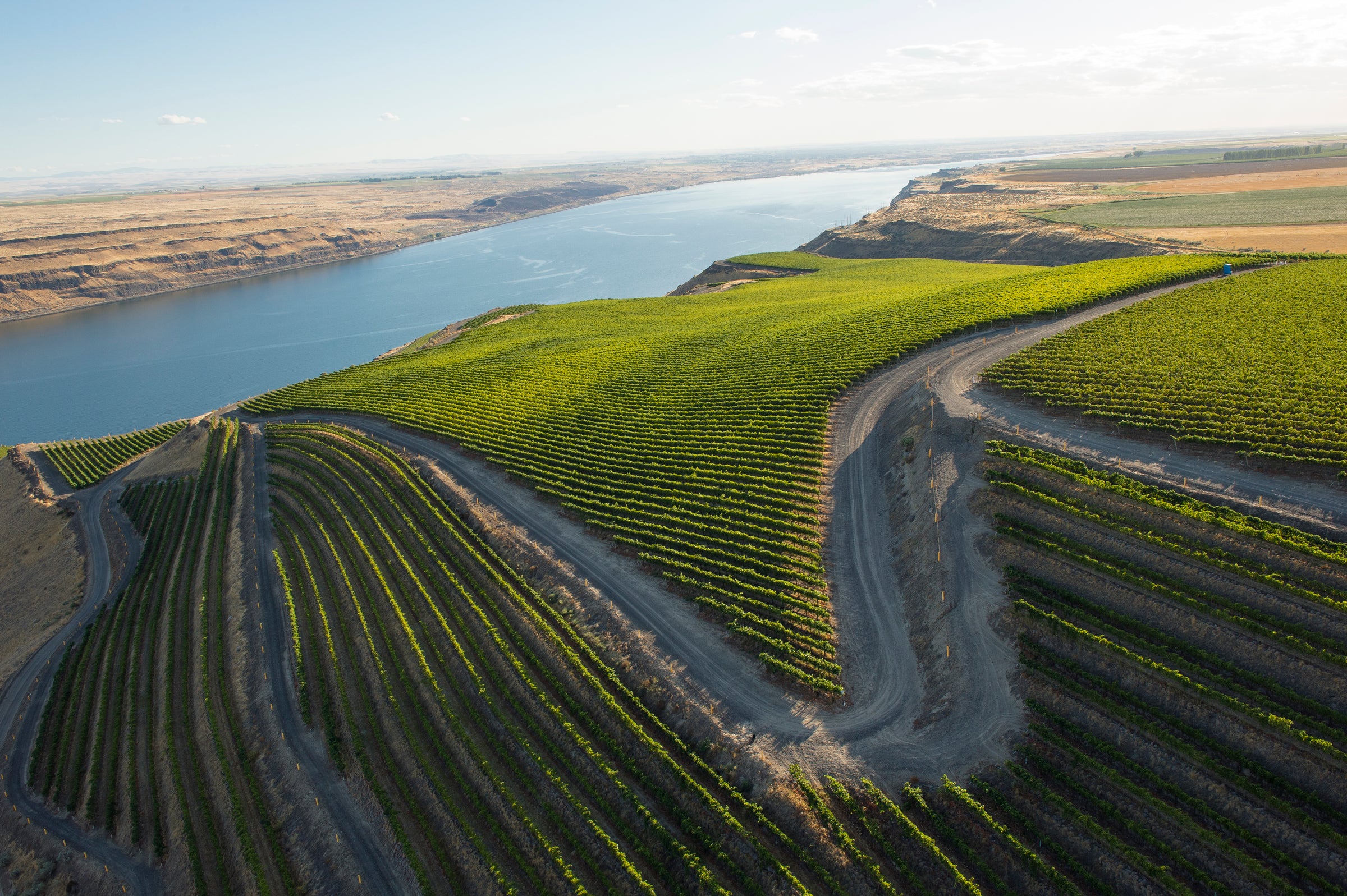
Washington

Columbia Valley

Like many Washington wines, the “Columbia Valley” indication only tells part of the story: Columbia Valley covers a huge swath of Central
Washington, within which are a wide array of smaller AVAs (appellations).
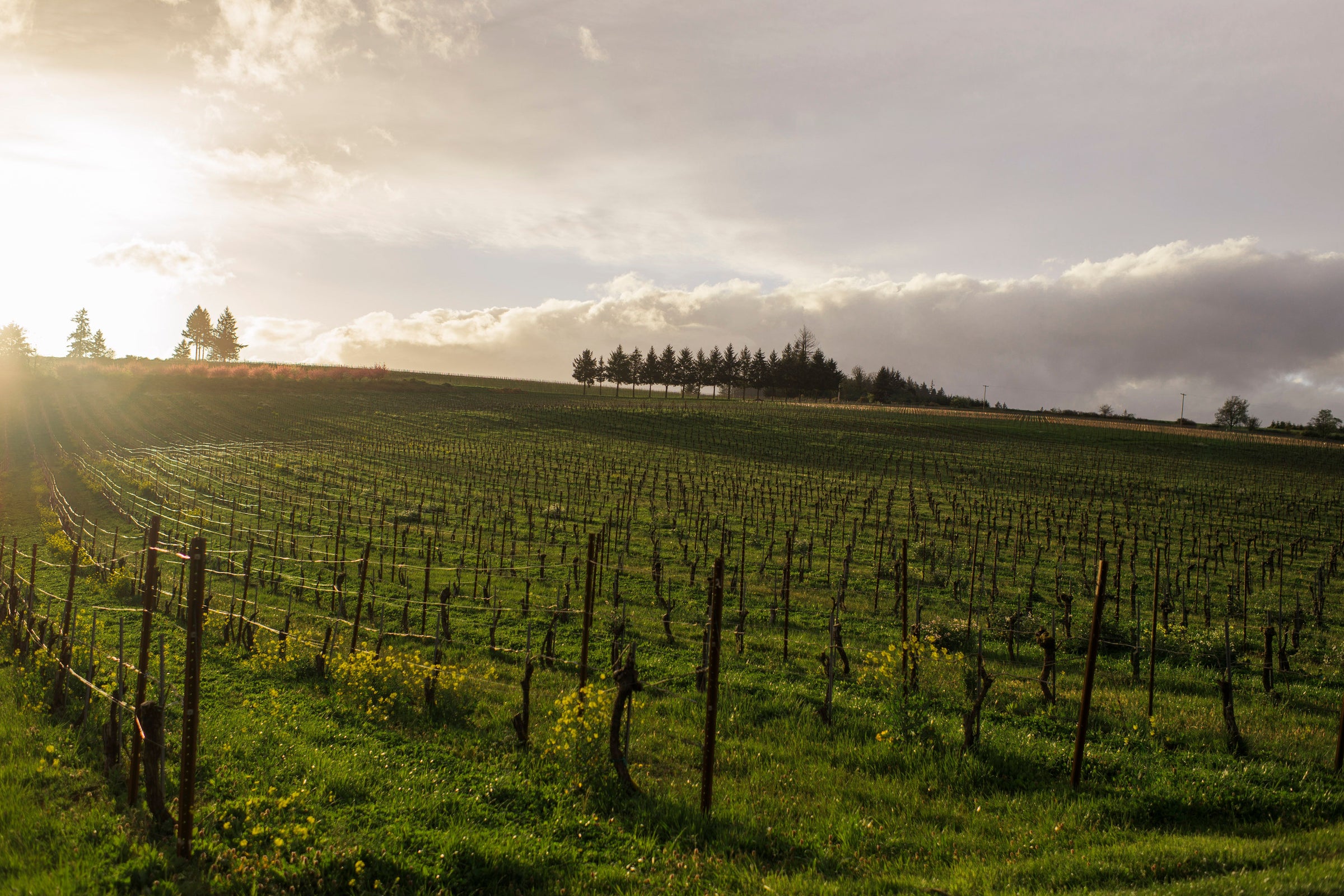
Oregon

Willamette Valley

Oregon’s Willamette Valley has become an elite winegrowing zone in record time. Pioneering vintner David Lett, of The Eyrie Vineyard, planted the first Pinot Noir in the region in 1965, soon to be followed by a cadre of forward-thinking growers who (correctly) saw their wines as America’s answer to French
Burgundies. Today, the Willamette
Valley is indeed compared favorably to Burgundy, Pinot Noir’s spiritual home. And while Pinot Noir accounts for 64% of Oregon’s vineyard plantings, there are cool-climate whites that must not be missed.

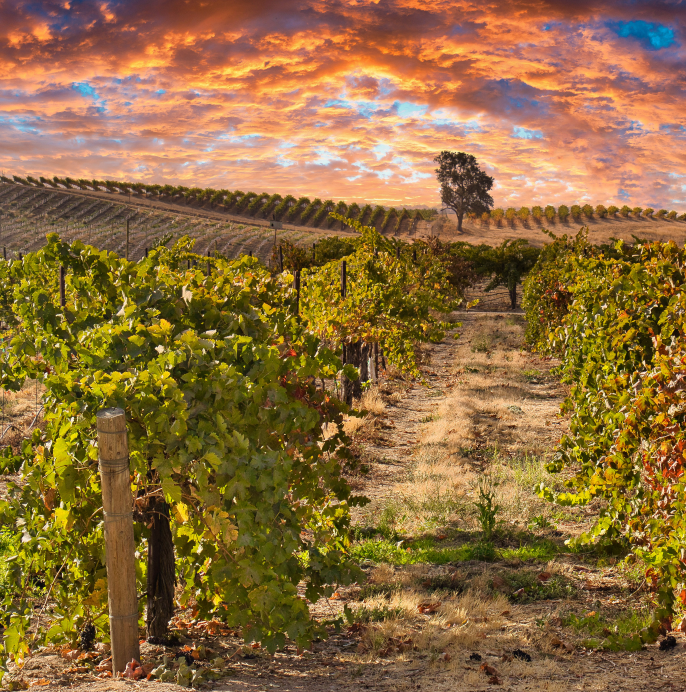
California

Santa Barbara

Among the unique features of Santa Barbara County appellations like Ballard Canyon (a sub-zone of the Santa Ynez Valley AVA), is that it has a cool, Pacific-influenced climate juxtaposed with the intense luminosity of a southerly
latitude (the 34th parallel). Ballard Canyon has a more north-south orientation compared to most Santa Barbara AVAs, with soils of sandy
clay/loam and limestone.
California

Paso Robles

Situated at an elevation of 1,600 feet, it is rooted in soils of sandy loam and falls within the Highlands District of the Paso Robles AVA.
New York

North Fork

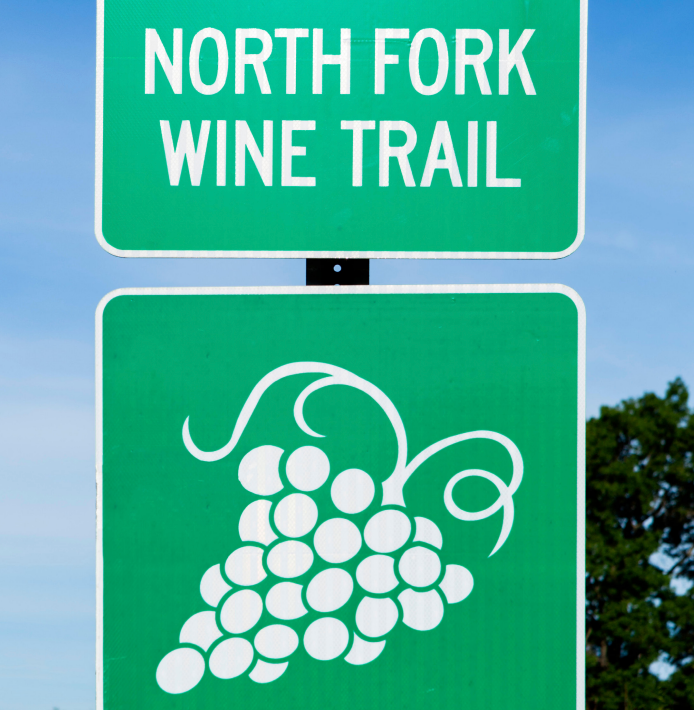
Wine growers and producers on Long Island’s North Fork have traditionally compared their terroir to that of Bordeaux and have focused on French varieties such as Cabernet Franc and Merlot.

Others We Love