“Ange” is one of several Pinot Noirs we’ve recommended recently that comes from a terroir not readily associated with the grape. Germany and Austria, for example, have given us a trove of amazing Pinot finds, and since neither country has much of a ‘reputation’ for these wines, they’re absolute steals for the quality. The same goes for French Pinots grown outside of Burgundy, most notably the Loire Valley: there’s exceedingly pretty Pinot made in the Sauvignon Blanc stronghold of Sancerre, while Domaine de l’Ecu, firmly in the heart of Loire’s Muscadet country, knocks it out of the park with Ange, which is sourced from roughly 30-year-old vines.
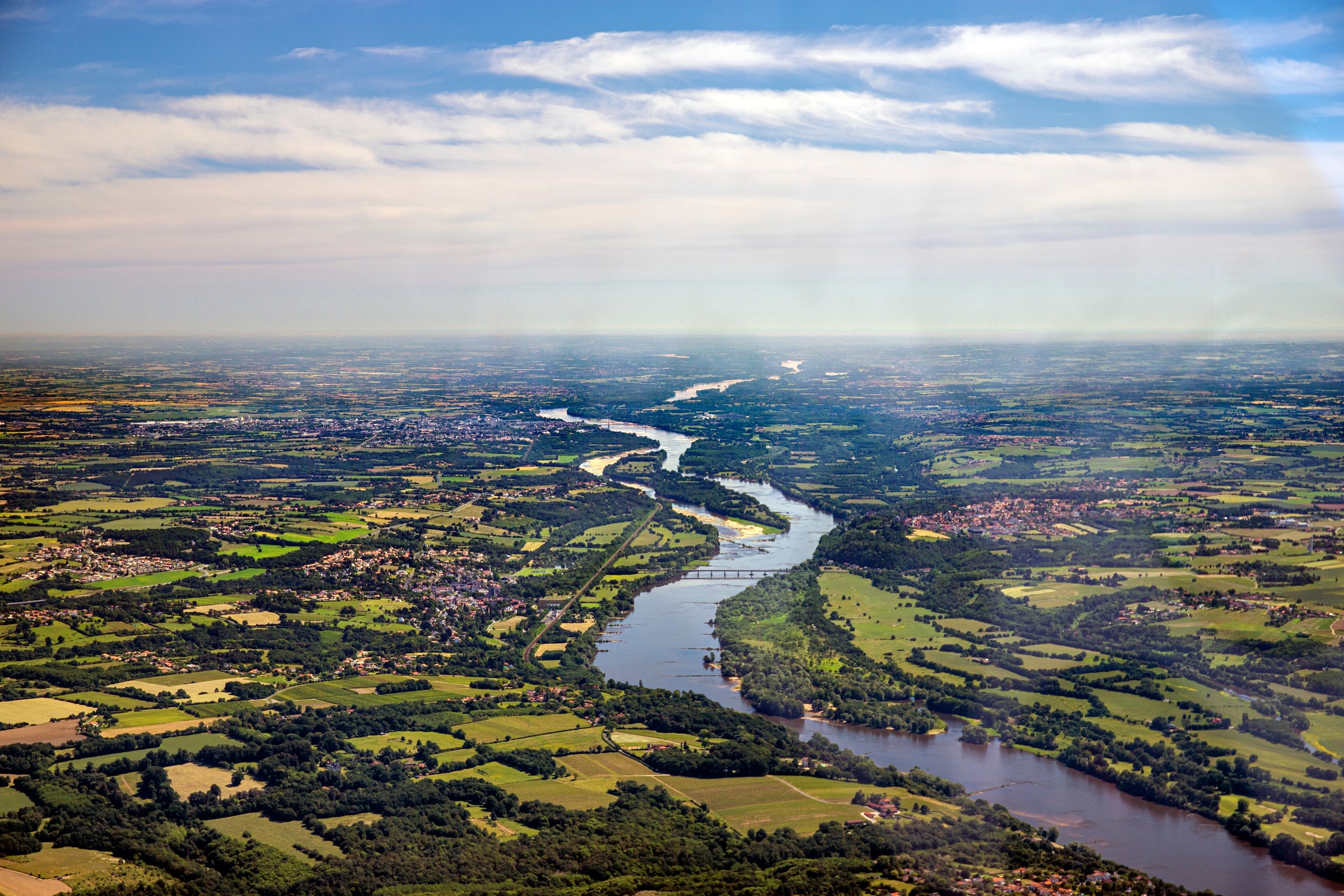
Domaine de l’Ecu has been a stalwart in the western Loire for decades but has really raised its profile recently as consumers have re-discovered the wines of Muscadet Sèvre et Maine. Muscadet was once dismissed as fizzy, lightweight wine for washing down a plateau of oysters, but not anymore, and Ecu has been at the forefront of showing what the Mélon grape can do – even going as far as to bottle its Muscadets by soil type (their vineyards, situated among the tangle of Loire tributaries near the Atlantic coast, feature subsoils of the metamorphic rocks Gneiss and Orthogneiss, as well as Granite). The vineyard that supplies the Pinot Noir for Ange is a southwest-facing site sitting atop both Gneiss and Orthogneiss, mineral-rich soils full of stuff like mica and quartz.
The vinification of this wine is resolutely natural, in keeping with Domaine de l’Ecu’s ethos. At a time when vignerons were industrializing their vineyards in the 1970s, Guy Bossard swore off all chemicals, fertilizers, and herbicides and de-modernized his cellar work, eschewing the addition of sulfur where possible and embracing native-yeast fermentations. All of Domaine de l’Ecu’s vineyards, which Guy has personally farmed for several decades, have been certified organic since 1975. In 1998, he received biodynamic certification as well. In recent years, Guy began working side-by-side with Fred Niger Van Herck, his anointed successor, and the quality and purity of the wines continues to rise.
The 2015 Ange was fermented using only ambient yeast, with whole grape clusters included, after which it spent eight months’ aging in amphorae. No sulfur was used during vinification, and the wine was neither fined nor filtered. This hands-off approach yielded a wine that feels very alive – not raw and prickly like some natural wines but heady and gripping and impactful. It’s an incandescent ruby red, with penetrating aromas of strawberry, wild raspberry, black cherry and lots of floral notes – roses, lavender, and violets among them. Then there’s the wine’s mineral underpinning, which reminds me a bit of some of the great cru Beaujolais wines we’ve been drinking lately; it has that flinty, granitic crunch to it that just snaps you to attention and an exceptionally lengthy finish for a medium-weight wine.
If enjoying this wine now I’d suggest decanting it for an hour or two to release its perfume and allow to velvet like texture to emerge. Ideally serve at about 65 degrees in Burgundy stems for maximum aromatic impact, and as far as food goes, I don’t know where to start: its combination of depth and finesse makes it so versatile, it could go with just about anything (I’m going to try it with a
classic coq au vin). Be sure to grab a few of these, as it is (a) very rare and (b) worthy of stashing away for a good five years or more.