Placeholder Image

Matt Morris, “Heritage” Red Blend

California, United States 2018 (750mL)
Regular price$55.00
/
Shipping calculated at checkout.
Your cart is empty.
  • Free Shipping on Orders Over $375
  • In stock, ready to ship
Fruit
Earth
Body
Tannin
Acid
Alcohol

Matt Morris, “Heritage” Red Blend

No one disputes the greatness of Napa Valley Cabernet Sauvignon. But Matt Morris wondered: What about some of the other varieties with deep roots in this terroir? What would happen if you devoted as much attention to a grape like Charbono—a “heritage” Californian variety that has all but disappeared from existence—as you would with top-class Cabernet? Morris, a film director and photographer, initially became fascinated with Charbono as a kind of historical artifact, but then he made some wine from it and the one-off experiment turned into a full-blown passion project.


It should be said that Morris didn’t source just any old Charbono—he swung arrangements with the owners of the Shypoke and Tofanelli vineyards, two of Napa’s most storied sites—nor did he skimp on winemaking talent: His first three vintages were made by Benoit Touquette of Realm Cellars, the more recent bottlings by former San Francisco Chronicle “Winemaker of the Year” Françoise Peschon, of Araujo fame. This is some passion project, and it shows in this blockbuster 2018 blend, aptly named “Heritage.” Here, that old-vine Charbono is combined with Petite Sirah and Malbec to create a bold, brooding Napa red that is truly a thing unto itself. Its dense concentration and dusty minerality calls to mind some of Randy Dunn’s muscular mountain-grown creations, but there is incredible polish as well. This 2018 is like a wizened old farmer all dressed up in his Sunday best, and it will likely enjoy similar longevity. Like Morris, we’re all wondering: Have we abandoned Charbono to our detriment?


Given that there are fewer than 70 acres of Charbono left in California, it’s probably too late to expect any kind of comeback for the variety. But of those 70 acres, Morris has found perhaps the best old-vine material out there. The Shypoke Vineyard, just south of Calistoga, dates to 1896, while Tofanelli, perhaps best known for Zinfandel, goes back to the 1920s. Both sites have been farmed by multiple generations of the same families, supplying Morris with Charbono from vines exceeding 40 years of age.


In 2019, Morris (and Peschon) were featured in an article by Chronicle wine columnist Esther Mobley, who reported on his project and the near-extinction of Charbono. “Like Zinfandel or Petite Sirah,” Mobley wrote, “Charbono is a fundamentally American wine.” Inglenook winery once produced an acclaimed Charbono, as has Ridge, but for the most part, “varietal” Charbono is a niche item. The variety, which DNA fingerprinting has linked to the Corbeau variety of the Savoie in France (as well as Bonarda in Argentina), produces reds with an inky hue, firm tannins, and dark fruit.


But unlike a lot of varieties well-suited to hot climates, Charbono’s alcohol levels remain modest and acidity levels robust. It has long been prized as a blending variety—lending color and backbone—but it has rarely played a starring role. Morris makes vineyard-designated Charbonos from both Shypoke and Tofanelli, while “Heritage” is a blend based on 57% Charbono (from Shypoke and Tofanelli) combined with 28% Petite Sirah and 15% Malbec. The wine was fermented in large puncheons and then aged in neutral French oak barrels for 18 months before bottling.


This 2018 is, in a word, a massive wine—but it is also a balanced wine, one blessed with great freshness and not-excessive alcohol. It displays an opaque, ink-dark hue in the glass, with aromas of blackberry, black plum, pomegranate molasses, lavender, violet, cacao nibs, graphite, and turned earth carrying over to the full-bodied palate. While quite rich, the wine is firmly structured, with lots of minerality on the finish and some sandiness (thanks, Malbec) to the tannins. Give it a good 30-45 minutes in a decanter if you’re enjoying it now, and serve it at 60-65 degrees in Bordeaux stems. There’s plenty of savor to complement the concentrated fruit, making this a great food wine. My first instinct is to try it with some smoky barbecue, of the type featured in the attached recipe. This wine isn’t merely unique: It’s a showstopper! Cheers!

Placeholder Image
Country
Region
Sub-Region
Soil
Farming
Blend
Alcohol
OAK
TEMP.
Glassware
Drinking
Decanting

United States

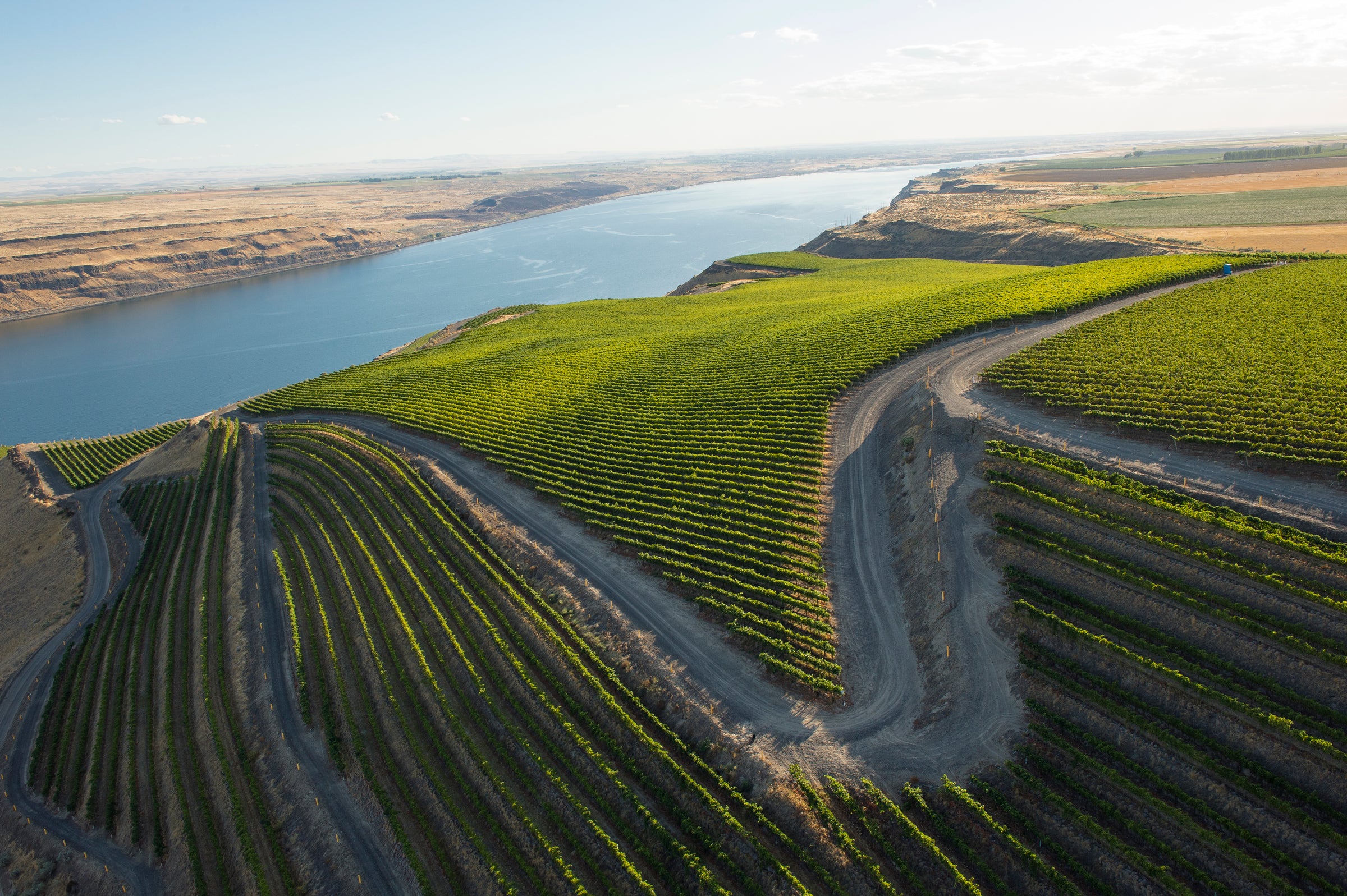
Washington

Columbia Valley

Like many Washington wines, the “Columbia Valley” indication only tells part of the story: Columbia Valley covers a huge swath of Central
Washington, within which are a wide array of smaller AVAs (appellations).
Oregon

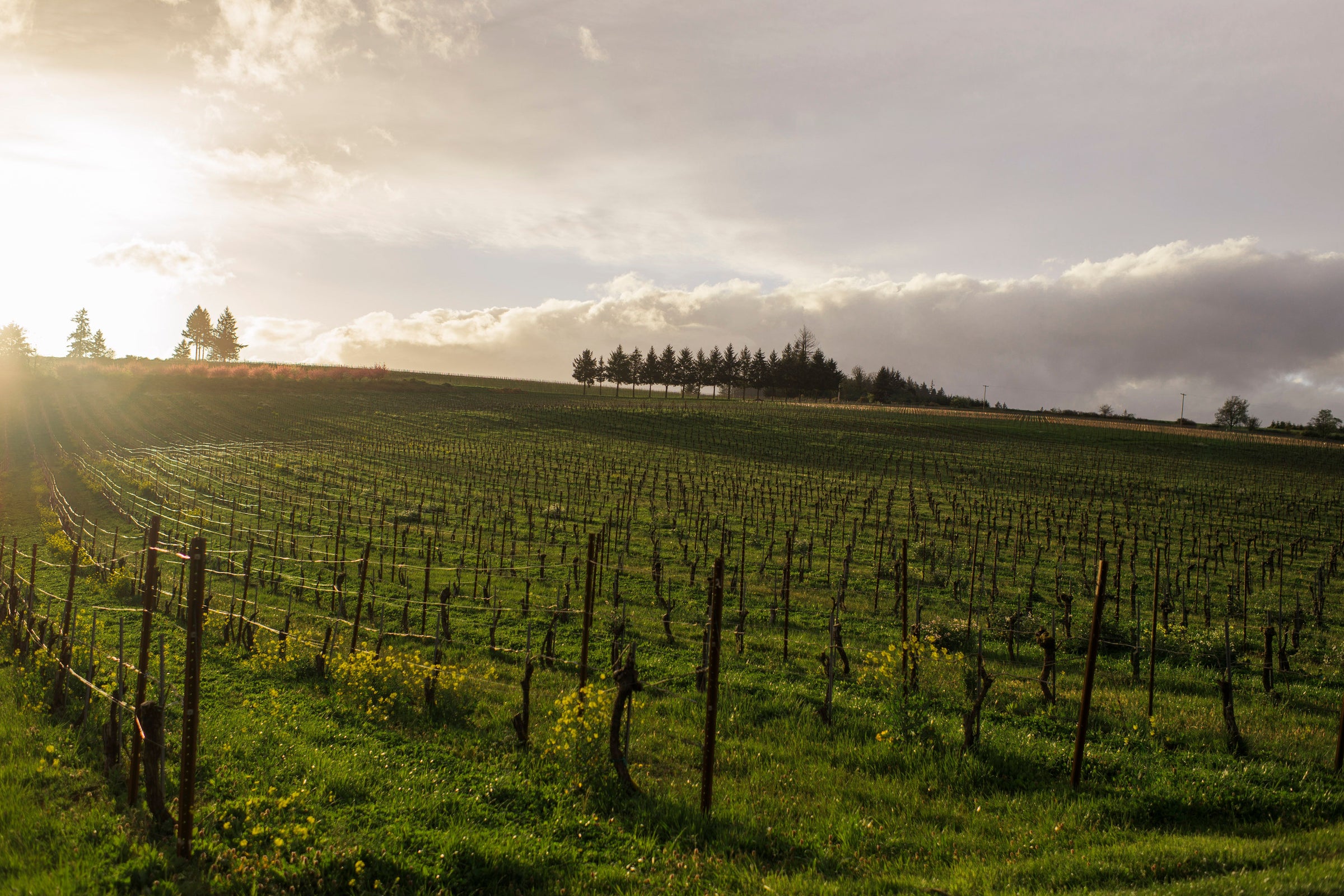
Willamette Valley

Oregon’s Willamette Valley has become an elite winegrowing zone in record time. Pioneering vintner David Lett, of The Eyrie Vineyard, planted the first Pinot Noir in the region in 1965, soon to be followed by a cadre of forward-thinking growers who (correctly) saw their wines as America’s answer to French
Burgundies. Today, the Willamette
Valley is indeed compared favorably to Burgundy, Pinot Noir’s spiritual home. And while Pinot Noir accounts for 64% of Oregon’s vineyard plantings, there are cool-climate whites that must not be missed.

California

Santa Barbara

Among the unique features of Santa Barbara County appellations like Ballard Canyon (a sub-zone of the Santa Ynez Valley AVA), is that it has a cool, Pacific-influenced climate juxtaposed with the intense luminosity of a southerly
latitude (the 34th parallel). Ballard Canyon has a more north-south orientation compared to most Santa Barbara AVAs, with soils of sandy
clay/loam and limestone.
California

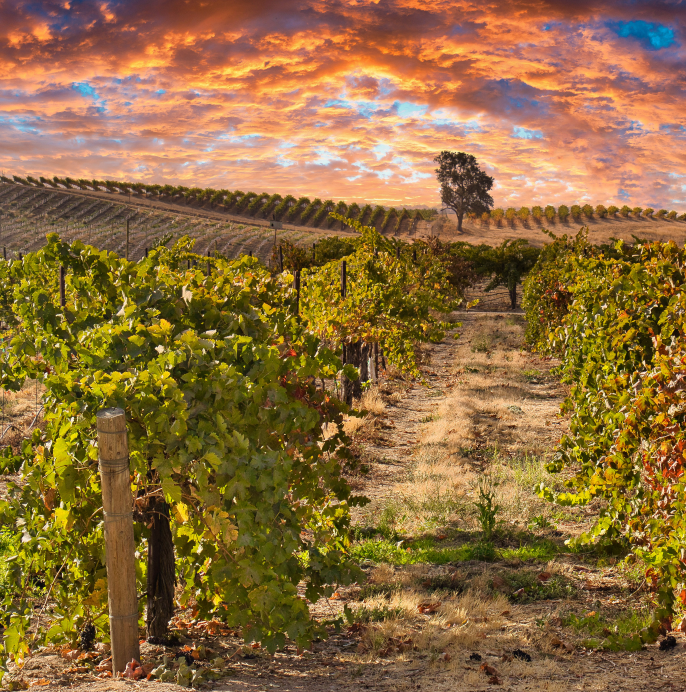
Paso Robles

Situated at an elevation of 1,600 feet, it is rooted in soils of sandy loam and falls within the Highlands District of the Paso Robles AVA.
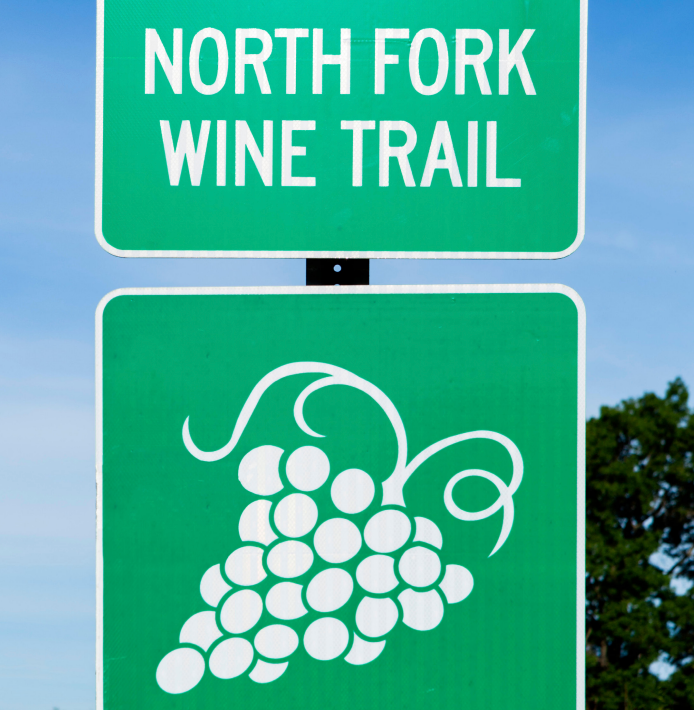
New York

North Fork

Wine growers and producers on Long Island’s North Fork have traditionally compared their terroir to that of Bordeaux and have focused on French varieties such as Cabernet Franc and Merlot.

Others We Love